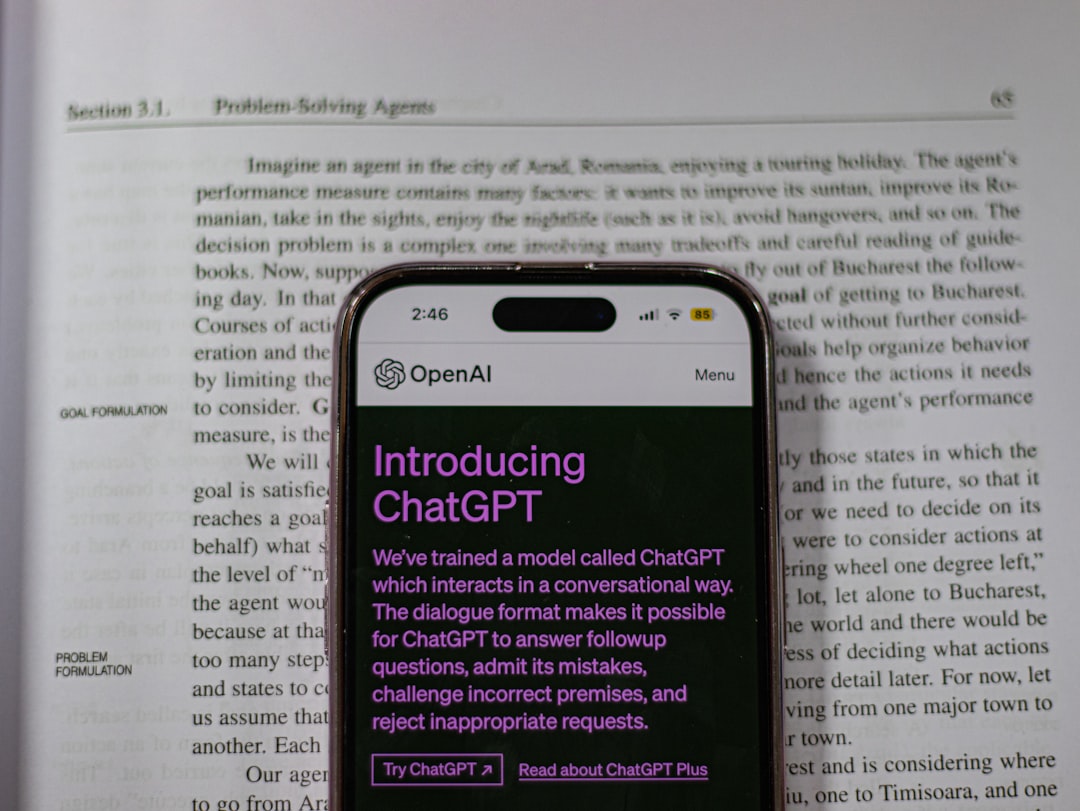

In the rapidly evolving landscape of finance and investment, the integration of artificial intelligence (AI) tools has become increasingly prevalent. Among these tools, ChatGPT stands out as a versatile and powerful resource for investors seeking to enhance their research capabilities. This AI-driven language model, developed by OpenAI, can assist in various aspects of investment research, from generating ideas to analyzing complex financial data. By leveraging natural language processing, ChatGPT can interpret vast amounts of information, making it an invaluable asset for both novice and seasoned investors.
The potential applications of ChatGPT in investment research are vast. Investors can utilize this tool to streamline their research processes, gain insights into market trends, and even evaluate specific companies' financial health. As the financial markets become more interconnected and data-driven, the ability to harness AI for investment research can provide a competitive edge. However, while ChatGPT offers numerous advantages, it is essential to understand its limitations and best practices to maximize its effectiveness in the investment decision-making process.
For those interested in enhancing their investment research techniques, a related article that delves into effective strategies for financial planning can be found at the Institute of Trading. This resource provides valuable insights that complement the use of ChatGPT for investment research, offering a broader perspective on how to make informed financial decisions. You can explore this further by visiting this link.
Key Takeaways
- ChatGPT can assist in generating innovative investment ideas and identifying market trends.
- It helps analyze company financials and performance for informed decision-making.
- The tool supports industry and sector analysis to understand broader market dynamics.
- ChatGPT aids in risk assessment and portfolio management by evaluating potential risks.
- Users should be aware of best practices and limitations when integrating ChatGPT into investment research.
Generating Investment Ideas with ChatGPT
One of the most compelling features of ChatGPT is its ability to generate investment ideas based on user-defined parameters. Investors can input specific criteria such as industry focus, market capitalization, or geographic location, and ChatGPT can produce a list of potential investment opportunities that align with those parameters. For instance, an investor interested in renewable energy stocks might prompt ChatGPT with a request for companies in that sector with strong growth potential. The AI can then analyze recent trends and suggest companies that fit the criteria, providing a starting point for further research.
Moreover, ChatGPT can also assist in brainstorming sessions by offering creative insights that may not be immediately apparent to human analysts. By synthesizing information from various sources, it can highlight emerging sectors or innovative companies that are gaining traction in the market. For example, if an investor is exploring opportunities in technology, ChatGPT might suggest looking into artificial intelligence startups or cybersecurity firms that have recently attracted significant venture capital funding. This capability to generate diverse ideas can help investors expand their horizons and consider options they might not have previously contemplated.
Analyzing Market Trends and Sentiment with ChatGPT

Understanding market trends and sentiment is crucial for making informed investment decisions. ChatGPT can analyze large volumes of news articles, social media posts, and financial reports to gauge public sentiment regarding specific stocks or sectors. By processing this information, the AI can provide insights into how market sentiment is shifting over time. For instance, if there is a surge in positive sentiment surrounding electric vehicle manufacturers due to favorable government policies or technological advancements, ChatGPT can highlight this trend and suggest potential investment opportunities within that space.
Additionally, ChatGPT can assist in identifying macroeconomic trends that may impact various industries. By analyzing economic indicators such as interest rates, inflation rates, and employment data, the AI can help investors understand the broader economic landscape. For example, if inflation is rising and central banks are expected to increase interest rates, ChatGPT might suggest sectors that historically perform well during such economic conditions, such as financial services or commodities. This ability to synthesize diverse data points into actionable insights makes ChatGPT a valuable tool for investors looking to navigate complex market dynamics.
Evaluating Company Financials and Performance

A critical aspect of investment research involves evaluating a company's financial health and performance metrics. ChatGPT can assist investors in analyzing key financial statements such as income statements, balance sheets, and cash flow statements. By inputting specific financial data or asking for explanations of various metrics, investors can gain a clearer understanding of a company's profitability, liquidity, and overall financial stability. For instance, an investor might ask ChatGPT to explain the significance of a company's price-to-earnings (P/E) ratio or how its debt-to-equity ratio compares to industry averages.
Furthermore, ChatGPT can help investors identify trends in a company's financial performance over time. By analyzing historical data and comparing it with industry benchmarks, the AI can highlight areas where a company excels or may be underperforming. For example, if an investor is considering investing in a retail company, ChatGPT could analyze its sales growth over the past five years compared to competitors in the same sector. This comparative analysis can provide valuable context for assessing whether a company's current valuation is justified based on its historical performance.
If you're interested in enhancing your investment research with innovative tools, you might find the article on portfolio management particularly insightful. It explores various strategies and techniques that can complement the use of ChatGPT for generating effective prompts. By integrating these approaches, you can refine your investment analysis and decision-making process. For more information, check out the related article on portfolio management.
Using ChatGPT for Industry and Sector Analysis
| Prompt Type | Purpose | Example Prompt | Expected Output | Effectiveness Rating (1-5) |
|---|---|---|---|---|
| Market Overview | Get a summary of current market conditions | “Provide a summary of the current stock market trends in technology sector.” | Concise market trend analysis with key drivers and risks | 4 |
| Company Analysis | Evaluate a specific company’s financial health and prospects | “Analyze the financial performance and growth prospects of Company X.” | Overview of financial ratios, recent earnings, and future outlook | 5 |
| Industry Comparison | Compare companies within the same industry | “Compare Company A and Company B in the renewable energy sector.” | Side-by-side comparison of key metrics and competitive advantages | 4 |
| Risk Assessment | Identify potential risks related to an investment | “List the main risks associated with investing in emerging markets.” | Detailed risk factors including political, economic, and market risks | 4 |
| Valuation Metrics | Provide valuation multiples and benchmarks | “What are the typical P/E and P/B ratios for the retail sector?” | Industry average valuation multiples with context | 3 |
| Investment Thesis | Generate a concise investment thesis for a stock | “Create an investment thesis for Company Y based on recent developments.” | Summary of key reasons to buy, hold, or sell the stock | 5 |
Investors often need to conduct thorough industry and sector analyses to make informed decisions about where to allocate their capital. ChatGPT can facilitate this process by providing comprehensive overviews of various industries, including key players, market dynamics, and growth prospects. By querying the AI about specific sectors—such as healthcare, technology, or consumer goods—investors can receive detailed insights into current trends and challenges facing those industries.
Moreover, ChatGPT can assist in identifying competitive advantages within specific sectors. For instance, if an investor is interested in the pharmaceutical industry, they might ask ChatGPT about companies with strong research and development pipelines or those that have recently received regulatory approvals for new drugs. This level of analysis allows investors to pinpoint companies that are well-positioned for growth within their respective industries. Additionally, by understanding the broader industry context, investors can make more informed decisions about which companies are likely to thrive in changing market conditions.
Risk Assessment and Portfolio Management with ChatGPT
You can easily estimate your future earnings using the wealth calculator.
Effective risk assessment is a cornerstone of successful investing. ChatGPT can aid investors in evaluating potential risks associated with specific investments or overall portfolio exposure. By analyzing historical volatility data and market correlations, the AI can help investors understand how different assets may react under various market conditions.
For example, if an investor holds a diversified portfolio of stocks and bonds, they might use ChatGPT to assess how changes in interest rates could impact their bond holdings relative to their equity investments.
In addition to risk assessment, ChatGPT can assist in portfolio management by providing insights into asset allocation strategies. Investors can query the AI about optimal diversification techniques based on their risk tolerance and investment goals. For instance, an investor with a high-risk appetite might seek advice on incorporating more growth-oriented stocks into their portfolio while balancing it with defensive assets during periods of market uncertainty. This tailored approach to portfolio management enables investors to make strategic adjustments that align with their long-term objectives.
Incorporating ChatGPT into Investment Decision Making
Integrating ChatGPT into the investment decision-making process requires a thoughtful approach that balances AI-generated insights with human judgment. While the AI can provide valuable data-driven recommendations and analyses, it is essential for investors to apply their own expertise and intuition when making final decisions. For example, an investor might use ChatGPT to gather information on potential investments but should also consider qualitative factors such as management quality or company culture that may not be fully captured by quantitative data alone.
Moreover, investors should remain vigilant about verifying the information provided by ChatGPT against reputable sources. While the AI is designed to synthesize information from various inputs effectively, it is not infallible and may occasionally produce inaccuracies or outdated information. Therefore, cross-referencing insights from ChatGPT with trusted financial news outlets or company filings is crucial for ensuring that investment decisions are based on accurate and up-to-date information.
Best Practices and Limitations of Using ChatGPT for Investment Research
To maximize the benefits of using ChatGPT for investment research, investors should adhere to several best practices. First and foremost, clearly defining queries is essential for obtaining relevant insights from the AI. Providing specific parameters or context will enable ChatGPT to generate more accurate responses tailored to individual needs. Additionally, maintaining an iterative approach—where investors refine their questions based on previous responses—can lead to deeper insights over time.
However, it is equally important to recognize the limitations of using ChatGPT in investment research. The AI's knowledge is based on data available up until October 2023; therefore, it may not reflect the most current market developments or emerging trends beyond that date. Furthermore, while ChatGPT excels at processing large volumes of information quickly, it lacks the ability to form subjective opinions or understand nuanced human emotions that often drive market behavior.
In conclusion, while ChatGPT offers a powerful tool for enhancing investment research capabilities through idea generation, trend analysis, financial evaluation, industry insights, risk assessment, and portfolio management support, it should be used as a complement rather than a replacement for human expertise in investment decision-making processes. By combining AI-driven insights with personal judgment and thorough verification practices, investors can navigate the complexities of the financial markets more effectively.
Learn more about the 1-Hour Millionaire System