
Understanding your risk tolerance is crucial when it comes to investing. It is important to assess how much risk you are willing to take on in order to achieve your investment goals. Risk tolerance can vary from person to person, and it is important to understand your own comfort level with risk before making any investment decisions. Some people may be comfortable with taking on higher levels of risk in order to potentially achieve higher returns, while others may prefer to take on lower levels of risk in order to preserve their capital.
One way to assess your risk tolerance is to consider your investment time horizon. If you have a longer time horizon, you may be more willing to take on higher levels of risk, as you have more time to recover from any potential losses. On the other hand, if you have a shorter time horizon, you may prefer to take on lower levels of risk in order to protect your capital. It is also important to consider your financial situation and overall investment goals when assessing your risk tolerance. By understanding your risk tolerance, you can make more informed investment decisions that align with your personal comfort level.
Understanding your risk tolerance is an important aspect of investing. It is crucial to assess how much risk you are willing to take on in order to achieve your investment goals. Risk tolerance can vary from person to person, and it is important to understand your own comfort level with risk before making any investment decisions. Some people may be comfortable with taking on higher levels of risk in order to potentially achieve higher returns, while others may prefer to take on lower levels of risk in order to preserve their capital. One way to assess your risk tolerance is to consider your investment time horizon. If you have a longer time horizon, you may be more willing to take on higher levels of risk, as you have more time to recover from any potential losses. On the other hand, if you have a shorter time horizon, you may prefer to take on lower levels of risk in order to protect your capital. It is also important to consider your financial situation and overall investment goals when assessing your risk tolerance. By understanding your risk tolerance, you can make more informed investment decisions that align with your personal comfort level.
Diversifying Your Portfolio
Diversifying your portfolio is an important strategy for managing risk and maximizing returns. By spreading your investments across different asset classes, industries, and geographic regions, you can reduce the impact of any one investment underperforming. Diversification can help protect your portfolio from market volatility and economic downturns, as different investments may react differently to market conditions.
One way to diversify your portfolio is by investing in a mix of stocks, bonds, and cash equivalents. Stocks have the potential for high returns but also come with higher levels of risk, while bonds provide a more stable source of income with lower levels of risk. Cash equivalents, such as money market funds, provide liquidity and stability. Another way to diversify is by investing in different industries and sectors, as well as in different geographic regions. By spreading your investments across different sectors and regions, you can reduce the impact of any one industry or region underperforming. Diversifying your portfolio can help you achieve a balance between risk and return, and it is an important strategy for long-term investment success.
Diversifying your portfolio is an important strategy for managing risk and maximizing returns. By spreading your investments across different asset classes, industries, and geographic regions, you can reduce the impact of any one investment underperforming. Diversification can help protect your portfolio from market volatility and economic downturns, as different investments may react differently to market conditions. One way to diversify your portfolio is by investing in a mix of stocks, bonds, and cash equivalents. Stocks have the potential for high returns but also come with higher levels of risk, while bonds provide a more stable source of income with lower levels of risk. Cash equivalents, such as money market funds, provide liquidity and stability. Another way to diversify is by investing in different industries and sectors, as well as in different geographic regions. By spreading your investments across different sectors and regions, you can reduce the impact of any one industry or region underperforming. Diversifying your portfolio can help you achieve a balance between risk and return, and it is an important strategy for long-term investment success.
Staying Informed About Market Trends
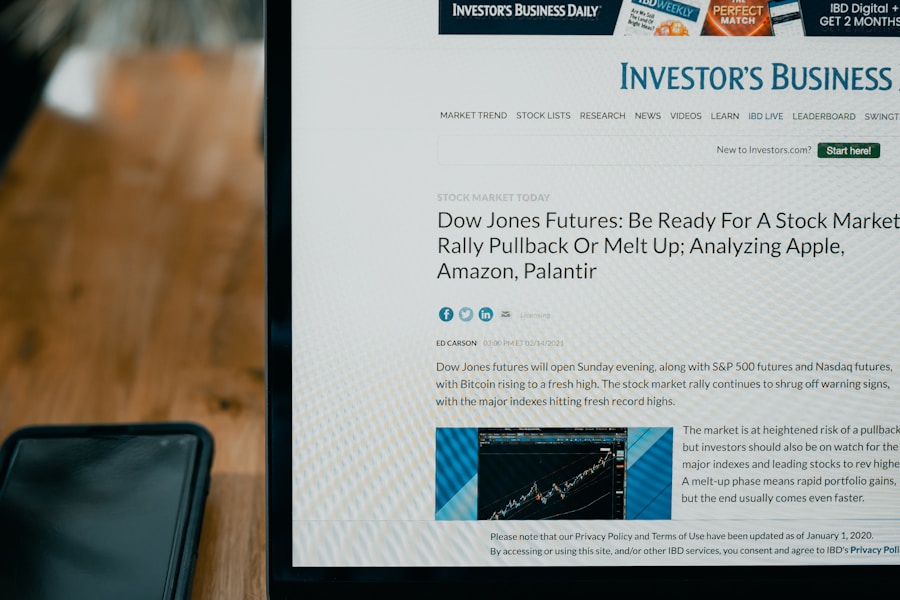
Staying informed about market trends is essential for making informed investment decisions. By staying up-to-date with market news and trends, you can identify potential opportunities and risks that may impact your investments. There are many sources of market information available, including financial news websites, investment publications, and market research reports. It is important to regularly review these sources in order to stay informed about market trends.
One way to stay informed about market trends is by following financial news websites and publications that provide up-to-date information on market developments. These sources often provide analysis and commentary on market trends, as well as insights from industry experts. Another way to stay informed is by regularly reviewing market research reports that provide in-depth analysis of specific industries or sectors. By staying informed about market trends, you can make more informed investment decisions that align with current market conditions.
Staying informed about market trends is essential for making informed investment decisions. By staying up-to-date with market news and trends, you can identify potential opportunities and risks that may impact your investments. There are many sources of market information available, including financial news websites, investment publications, and market research reports. It is important to regularly review these sources in order to stay informed about market trends. One way to stay informed about market trends is by following financial news websites and publications that provide up-to-date information on market developments. These sources often provide analysis and commentary on market trends, as well as insights from industry experts. Another way to stay informed is by regularly reviewing market research reports that provide in-depth analysis of specific industries or sectors. By staying informed about market trends, you can make more informed investment decisions that align with current market conditions.
Setting Clear Investment Goals
Setting clear investment goals is an important step in creating a successful investment strategy. By defining your investment objectives, you can establish a clear roadmap for achieving your financial goals. When setting investment goals, it is important to consider factors such as your time horizon, risk tolerance, and financial situation. Your investment goals should be specific, measurable, achievable, relevant, and time-bound (SMART).
One way to set clear investment goals is by identifying specific financial targets that you want to achieve within a certain time frame. For example, you may set a goal of saving a certain amount of money for retirement within the next 20 years. Another way to set clear investment goals is by establishing benchmarks for measuring progress towards your objectives. By setting clear investment goals, you can create a framework for making investment decisions that align with your long-term financial aspirations.
Setting clear investment goals is an important step in creating a successful investment strategy. By defining your investment objectives, you can establish a clear roadmap for achieving your financial goals. When setting investment goals, it is important to consider factors such as your time horizon, risk tolerance, and financial situation. Your investment goals should be specific, measurable, achievable, relevant, and time-bound (SMART). One way to set clear investment goals is by identifying specific financial targets that you want to achieve within a certain time frame. For example, you may set a goal of saving a certain amount of money for retirement within the next 20 years. Another way to set clear investment goals is by establishing benchmarks for measuring progress towards your objectives. By setting clear investment goals, you can create a framework for making investment decisions that align with your long-term financial aspirations.
Seeking Professional Advice
Seeking professional advice can be beneficial when it comes to making investment decisions. Financial advisors can provide valuable insights and expertise that can help you make more informed choices about your investments. When seeking professional advice, it is important to find an advisor who has the necessary qualifications and experience to provide sound financial guidance.
One way to seek professional advice is by working with a certified financial planner who can help you develop a comprehensive financial plan that aligns with your investment goals and risk tolerance. Another way to seek professional advice is by consulting with an investment advisor who can provide recommendations on specific investment opportunities based on their expertise and knowledge of the financial markets. By seeking professional advice, you can gain access to valuable insights that can help you make more informed investment decisions.
Seeking professional advice can be beneficial when it comes to making investment decisions. Financial advisors can provide valuable insights and expertise that can help you make more informed choices about your investments. When seeking professional advice, it is important to find an advisor who has the necessary qualifications and experience to provide sound financial guidance. One way to seek professional advice is by working with a certified financial planner who can help you develop a comprehensive financial plan that aligns with your investment goals and risk tolerance. Another way to seek professional advice is by consulting with an investment advisor who can provide recommendations on specific investment opportunities based on their expertise and knowledge of the financial markets. By seeking professional advice, you can gain access to valuable insights that can help you make more informed investment decisions.
Managing Emotions and Avoiding Impulsive Decisions
Managing emotions and avoiding impulsive decisions is important when it comes to investing. Emotions such as fear and greed can lead investors to make irrational decisions that may negatively impact their portfolios. It is important to remain disciplined and focused on long-term investment objectives in order to avoid making impulsive decisions based on short-term market fluctuations.
One way to manage emotions and avoid impulsive decisions is by developing a well-defined investment plan that outlines clear guidelines for making investment decisions based on predetermined criteria rather than emotional reactions. Another way to manage emotions is by maintaining a long-term perspective and avoiding the temptation to react impulsively to short-term market movements. By managing emotions and avoiding impulsive decisions, investors can stay focused on their long-term financial goals and avoid making decisions based on short-term emotions.
Managing emotions and avoiding impulsive decisions is important when it comes to investing. Emotions such as fear and greed can lead investors to make irrational decisions that may negatively impact their portfolios. It is important to remain disciplined and focused on long-term investment objectives in order to avoid making impulsive decisions based on short-term market fluctuations. One way to manage emotions and avoid impulsive decisions is by developing a well-defined investment plan that outlines clear guidelines for making investment decisions based on predetermined criteria rather than emotional reactions. Another way to manage emotions is by maintaining a long-term perspective and avoiding the temptation to react impulsively to short-term market movements. By managing emotions and avoiding impulsive decisions, investors can stay focused on their long-term financial goals and avoid making decisions based on short-term emotions.
Continuously Educating Yourself about Investment Strategies
Continuously educating yourself about investment strategies is essential for staying informed about the latest developments in the financial markets. By staying up-to-date with new investment strategies and techniques, you can enhance your knowledge and make more informed investment decisions that align with current market conditions.
One way to continuously educate yourself about investment strategies is by reading books and articles written by industry experts who provide valuable insights into different investment approaches and techniques. Another way to stay informed is by attending seminars and workshops that cover various aspects of investing, such as asset allocation, portfolio management, and risk management strategies. By continuously educating yourself about investment strategies, you can expand your knowledge base and make more informed choices about your investments.
Continuously educating yourself about investment strategies is essential for staying informed about the latest developments in the financial markets. By staying up-to-date with new investment strategies and techniques, you can enhance your knowledge and make more informed investment decisions that align with current market conditions. One way to continuously educate yourself about investment strategies is by reading books and articles written by industry experts who provide valuable insights into different investment approaches and techniques. Another way to stay informed is by attending seminars and workshops that cover various aspects of investing, such as asset allocation, portfolio management, and risk management strategies. By continuously educating yourself about investment strategies, you can expand your knowledge base and make more informed choices about your investments.
In conclusion, understanding your risk tolerance, diversifying your portfolio, staying informed about market trends, setting clear investment goals, seeking professional advice, managing emotions and avoiding impulsive decisions, and continuously educating yourself about investment strategies are all important aspects of creating a successful investment strategy. By taking these factors into consideration when making investment decisions, you can increase the likelihood of achieving your long-term financial goals while minimizing potential risks along the way.
In conclusion, understanding your risk tolerance, diversifying your portfolio, staying informed about market trends, setting clear investment goals, seeking professional advice, managing emotions and avoiding impulsive decisions, and continuously educating yourself about investment strategies are all important aspects of creating a successful investment strategy. By taking these factors into consideration when making investment decisions, you can increase the likelihood of achieving your long-term financial goals while minimizing potential risks along the way. It's important to remember that investing is a long-term endeavor, and by following these principles, you can build a solid foundation for your financial future. Keep in mind that the investment landscape is constantly evolving, so it's crucial to stay adaptable and open to adjusting your strategy as needed. With patience, discipline, and a well-thought-out plan, you can work towards building wealth and securing your financial well-being.