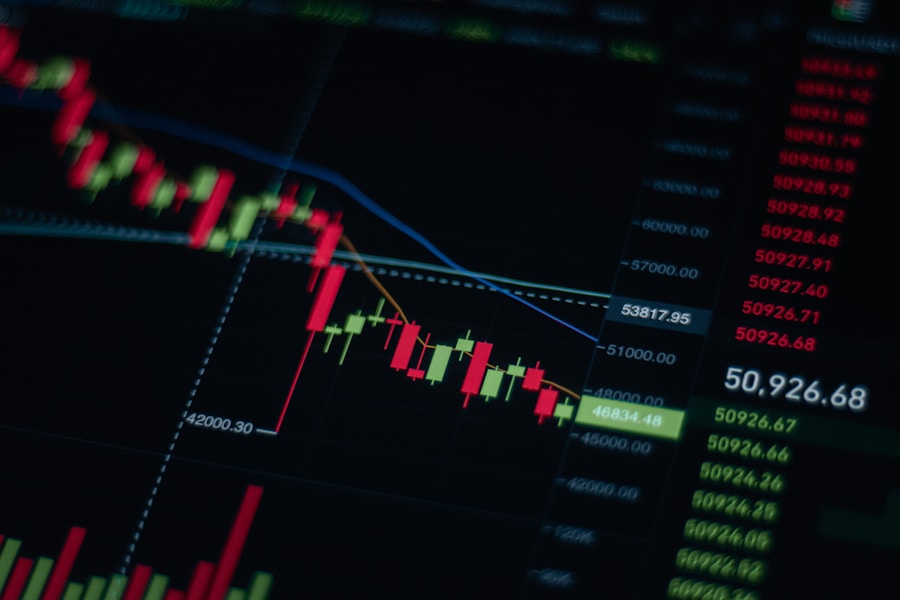

Market cycles are the natural ebb and flow of the financial markets, characterized by periods of expansion, peak, contraction, and trough. Understanding these cycles is crucial for investors as it allows them to anticipate and prepare for potential market movements. During the expansion phase, economic activity and stock prices are on the rise, leading to increased investor confidence and optimism. This is typically followed by a peak, where the market reaches its highest point before entering a contraction phase. During this phase, economic activity slows down, leading to a decline in stock prices and investor sentiment. Finally, the market reaches a trough, where it hits its lowest point before starting the cycle all over again.
It's important for investors to recognize these cycles and adjust their investment strategies accordingly. For example, during an expansion phase, investors may want to focus on growth stocks and take on more risk, while during a contraction phase, they may want to shift towards defensive stocks and reduce their exposure to riskier assets. By understanding market cycles, investors can make more informed decisions and potentially capitalize on market movements.
Market cycles can also be influenced by external factors such as geopolitical events, changes in monetary policy, and technological advancements. By staying informed and aware of these factors, investors can better anticipate market movements and adjust their strategies accordingly. Overall, understanding market cycles is essential for investors to navigate the ever-changing financial markets and make informed investment decisions.
Identifying Key Economic Indicators:
Key economic indicators are essential tools for investors to gauge the health of the economy and make informed investment decisions. These indicators provide valuable insights into various aspects of the economy, such as employment, inflation, consumer spending, and manufacturing activity. By monitoring these indicators, investors can gain a better understanding of the current economic environment and anticipate potential market movements.
One of the most important economic indicators is the unemployment rate, which reflects the percentage of the labor force that is unemployed and actively seeking employment. A rising unemployment rate may indicate a weakening economy, while a declining rate may signal economic growth. Another crucial indicator is the Consumer Price Index (CPI), which measures changes in the prices of goods and services purchased by consumers. A high CPI may indicate inflationary pressures, while a low CPI may suggest deflationary pressures.
Other key economic indicators include the Gross Domestic Product (GDP), which measures the total value of all goods and services produced within a country, and the Purchasing Managers' Index (PMI), which reflects the health of the manufacturing sector. By monitoring these indicators, investors can gain valuable insights into the current state of the economy and make more informed investment decisions.
Utilizing Technical Analysis:
Technical analysis is a valuable tool for investors to analyze historical price movements and identify potential trends in the financial markets. This analysis involves studying charts and using various technical indicators to predict future price movements. By utilizing technical analysis, investors can gain valuable insights into market trends and make more informed investment decisions.
One of the most commonly used technical indicators is moving averages, which help investors identify potential support and resistance levels in a stock's price. Another important indicator is the Relative Strength Index (RSI), which measures the momentum of a stock's price movements. By using these indicators and others, investors can identify potential entry and exit points for their investments.
In addition to technical indicators, investors can also use chart patterns to identify potential trends in the market. For example, a head and shoulders pattern may indicate a potential trend reversal, while a cup and handle pattern may suggest a potential breakout. By utilizing these tools, investors can gain valuable insights into potential market movements and make more informed investment decisions.
Leveraging Seasonal Trends:
Seasonal trends can have a significant impact on the financial markets, as certain industries and sectors may experience predictable patterns throughout the year. By leveraging these trends, investors can potentially capitalize on market movements and make more informed investment decisions.
One example of a seasonal trend is the "January effect," where small-cap stocks tend to outperform large-cap stocks in the month of January. This trend is believed to be driven by tax-loss selling at the end of the year, followed by a rebound in small-cap stocks at the beginning of the new year. Another example is the "sell in May and go away" phenomenon, where stock returns tend to be weaker during the summer months.
In addition to these seasonal trends, certain industries may also experience predictable patterns throughout the year. For example, retail stocks may see increased volatility during the holiday season, while energy stocks may be influenced by changes in oil prices throughout the year. By leveraging these seasonal trends, investors can potentially capitalize on market movements and make more informed investment decisions.
Capitalizing on News and Events:
News and events can have a significant impact on the financial markets, as they can influence investor sentiment and market movements. By staying informed and aware of these developments, investors can potentially capitalize on market movements and make more informed investment decisions.
One example of a news-driven market movement is an earnings announcement from a publicly traded company. Positive earnings results may lead to an increase in stock prices, while negative results may lead to a decline. Another example is geopolitical events such as elections or trade negotiations, which can influence investor sentiment and market movements.
In addition to news-driven events, economic reports such as employment data or inflation numbers can also have a significant impact on the financial markets. By staying informed and aware of these developments, investors can potentially capitalize on market movements and make more informed investment decisions.
Diversifying Investment Timelines:
Diversifying investment timelines is an important strategy for investors to manage risk and potentially maximize returns. By spreading out investments across different time horizons, investors can potentially reduce their exposure to market volatility and take advantage of different market conditions.
One way to diversify investment timelines is through dollar-cost averaging, where investors regularly invest a fixed amount of money over time regardless of market conditions. This strategy allows investors to potentially benefit from market downturns by purchasing more shares at lower prices.
Another way to diversify investment timelines is through asset allocation, where investors spread out their investments across different asset classes such as stocks, bonds, and real estate. By diversifying across different asset classes with varying time horizons, investors can potentially reduce their overall risk exposure and take advantage of different market conditions.
Overall, diversifying investment timelines is an important strategy for investors to manage risk and potentially maximize returns. By spreading out investments across different time horizons, investors can potentially reduce their exposure to market volatility and take advantage of different market conditions.
Balancing Risk and Reward:
Balancing risk and reward is a crucial aspect of investment management, as it allows investors to potentially maximize returns while managing their exposure to potential losses. By carefully assessing risk and reward, investors can make more informed investment decisions and potentially achieve their financial goals.
One way to balance risk and reward is through diversification, where investors spread out their investments across different asset classes and sectors. By diversifying their portfolios, investors can potentially reduce their overall risk exposure while still having the opportunity to benefit from different market conditions.
Another way to balance risk and reward is through proper asset allocation, where investors carefully allocate their investments across different asset classes based on their risk tolerance and investment objectives. By carefully assessing their risk tolerance and investment objectives, investors can potentially achieve a balance between risk and reward that aligns with their financial goals.
Overall, balancing risk and reward is an important aspect of investment management that allows investors to potentially maximize returns while managing their exposure to potential losses. By carefully assessing risk and reward, investors can make more informed investment decisions and potentially achieve their financial goals.